

ESET releases its cyber threat report for the first half of 2026: AI has increased attacker efficiency
The ESET Threat Report analyzes the influence of AI on attack development, identifying PromptSpy as the first known Android malware to use generative AI in its execution flow. ESET also highlights ClickFix, phishing, and ransomware as the most relevant topics of this semester
ESET, a leading company in proactive threat detection, presents the ESET Threat Report, its threat report for the first half of 2026, which summarizes trends in the threat landscape observed through ESET telemetry, as well as the perspectives of the company’s threat detection and research specialists (from December 2025 to May 2026). The report reveals how attackers continue to improve the efficiency and scalability of their operations, as, instead of relying on entirely new methods and tools, they are rapidly adapting established techniques to new platforms, technologies, and user behaviors.
Key findings from the report
- ClickFix — a social engineering technique that leverages fake error messages—has expanded into AI-themed help pages, browser extensions, and cloud authentication scenarios.
- QR code phishing — also known as “quishing”—has reached record levels in ESET telemetry.
- ESET analyzed nearly 900,000 AI skills — small functional components used by AI agents—and identified tens of thousands of suspicious instances and thousands of malicious ones. AI is also beginning to appear within malware.
- Ransomware showed no signs of slowing down, with its continued use of “EDR killers”—tools designed to disable security software during attacks.
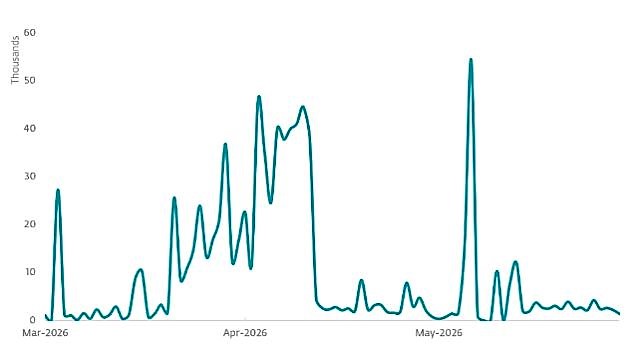
Artificial intelligence is playing an increasingly important role. During the first half of 2026, ESET analyzed nearly 900,000 AI skills — small functional components used by AI agents — and identified 25,000 suspicious instances and more than 3,000 outright malicious instances. The number of AI skills within this emerging ecosystem is growing, expanding the attack surface.
AI is also beginning to appear within malware itself. Shortly after the emergence of the first AI-powered ransomware in 2025, the ESET research team identified PromptSpy, the first known Android malware to use generative AI in its execution flow. This malware leverages AI—specifically Google’s Gemini—to interpret user interface elements and adapt to different devices and environments without relying on hardcoded behaviors.
“Instead of resorting to entirely new methods and tools, attackers are rapidly adapting established techniques to new platforms, technologies, and user behaviors.” “The number of AI capabilities within this new ecosystem is growing rapidly right now, further expanding the attack surface,” says Jiří Kropáč, Director of ESET’s Threat Prevention Labs. “On the other hand, PromptSpy illustrates the potential for greater flexibility in future threats, although the abuse protection measures included in large language models (LLMs) are likely hindering its adoption,” Kropáč explains.
AI skills are small plugins or sets of instructions that tell an AI agent how to perform a specific task, including which services or tools to use and what data to access. The published report addresses details about malicious AI skills that use third-party hacking tools and a suspicious self-modifying skill designed to create a persistence mechanism (JSON file) and a tool for self-modification (Python code). This can lead to unpredictable agent behavior or its misuse by an attacker. Finally, there are benign but problematic skills, such as those marketed as security scanners, which create a false sense of security but only implement basic scanning techniques—like antivirus tools from the 1990s—or simply check the reputation of hashes, URLs, and IP addresses on VirusTotal.
Unique AI skills analyzed by ESET systems (per day, average of seven)
Meanwhile, ClickFix—a social engineering technique that leverages fake error messages—has expanded beyond bogus CAPTCHA requests to encompass AI-related help pages, browser extensions, and cloud authentication scenarios. AI-fix shows how attackers exploit trust in generative AI, embedding ClickFix compromise chains into AI-generated troubleshooting content for nonexistent issues on pages that abuse the domains of AI giants. ConsentFix highlights an evolution toward token theft, combining ClickFix-style interaction with OAuth authorization abuse to hijack cloud accounts without stealing credentials, often bypassing two-factor authentication (MFA) and relying entirely on legitimate login workflows. ESET’s detections of this vector more than doubled between the second half of 2025 and the first half of 2026, indicating sustained activity and constant adaptation.
Phishing campaigns are also evolving in response to user behavior. QR code phishing—also known as “quishing”—has reached record levels in ESET telemetry, with attackers embedding malicious links in QR codes to evade inspection and redirect user interaction to mobile devices, while exploiting the implicit trust many people place in barcodes with square patterns. Approximately 11 % of all phishing emails detected in the first half of 2026 used QR codes, with QR code phishing threats being most prevalent in the US (19 % of detections), Spain (17 %), and Mexico (6 %).
Finally, ransomware activity showed no signs of slowing down, with the continued use of “EDR killers” — tools designed to disable security software during attacks. ESET’s research team has documented more than 100 different EDR killers in circulation, and new variants appear regularly. The number of ransomware attacks continued to grow in the first half of 2026, but the number of victims willing to pay reached historic lows. Three recent industry reports confirmed this downward trend, indicating that between 14% and 28% of victims paid the ransom.
More information can be found at: https://www.welivesecurity.com/es/informes/eset-threat-report-informe-de-amenazas-primer-semestre-2026/
ESET invites you to learn more about cybersecurity by visiting https://www.eset.com/ve/ in Venezuela, and following them on social media @eset_ve. Also on Instagram (@esetla) and Facebook (ESET).
With information and reference image provided by ESET and Comstat Rowland
Follow our news on Google! For current, interesting, and accurate information, click here to see all the content on Bitfinance.news. You can also find us on X/Twitter and Instagram
