

ESET visits Caracas universities and warns of a shortage of 5 million cybersecurity experts
During visits to Andrés Bello Catholic University and Monteávila University, company experts stated that between 74 and 80 percent of specialists are already training in AI to optimize and train advanced threat detection models
The technological talent gap and the increase in digital threats are shaping the current pace of academic training. With this context in mind, ESET launched its University Tour at Monteávila University (UMA) and Andrés Bello Catholic University (UCAB). This series of free educational seminars on cybersecurity, taught by ESET Latin America specialists, is aimed at university students across Latin America.
The academic event featured David González, Security Researcher at ESET Latin America (Mexico), who explained the pillars of digital defense. “Within cybersecurity, we are guided by the information security triad: confidentiality (access only to authorized users), integrity (data not altered without permission), and availability (services accessible 24/7),” he explained.
Between the Red Team and the Blue Team

During the sessions, González issued a warning about the current job market: “There is a significant talent shortage. It is estimated that the lack of technical and operational cybersecurity professionals is between 4 and 5 million people globally.”
Given this reality, the specialist encouraged students to pursue specialization in areas such as databases, programming, and operating systems with a focus on security. He also highlighted that between 74 % and 80 % of experts are already focusing on Artificial Intelligence (AI) to train advanced threat detection models.
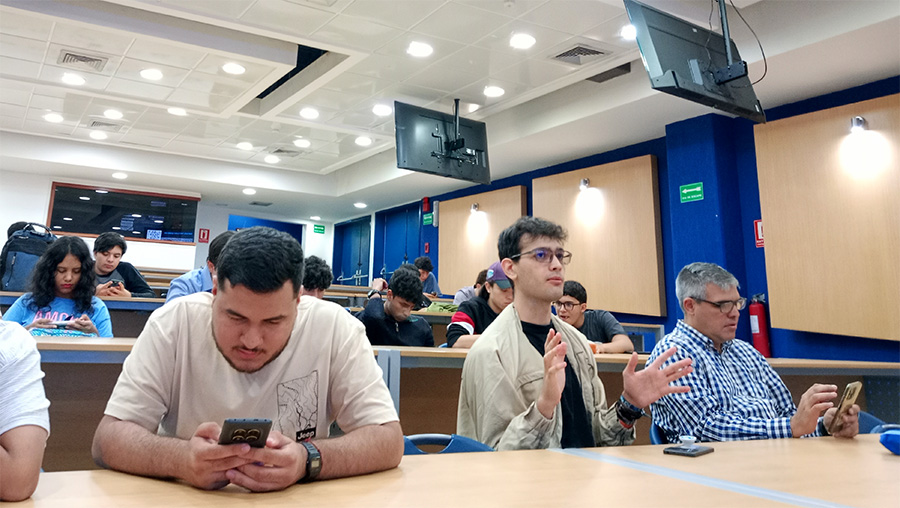
When detailing the dynamics between the Red Team (attack) and the Blue Team (defense), González emphasized the complexity of digital protection. “Defending is more difficult, since a cybercriminal only needs to find a single vulnerability or human error to compromise the entire strategy,” he noted. He also outlined entry-level roles in the job market—such as SOC analyst (anomaly monitoring), technical profiles (penetration testing), and managerial roles—and recommended fluency in English and obtaining certifications to diversify career paths.
Cultivating a culture of prevention from the ground up

For his part, José Luis Rangel, Commercial Manager of ESET Venezuela, emphasized the strategic importance of these talks for future professionals: “Our mission is to cultivate a culture of proactive prevention within academia,” he stated.
Likewise, Rangel highlighted the role that students will play in the short term: “These young people will lead the infrastructure of tomorrow. Alerting them to the reality of cyber threats and showing them the opportunities in this market is key to mitigating risks in the country.”

Hackathon 48–2026
As part of its commitment to innovation and young talent, ESET Venezuela complemented its training programs by participating as an official sponsor of the recent Hackathon 48–2026, a 48-hour event where entrepreneurs, developers, and designers come together to transform ideas into functional prototypes. This fosters innovation and collaboration, supporting the development of secure technological solutions in record time.
For more information on cybersecurity, visit the ESET website: https://www.eset.com/ve/. You can also follow them on social media: Instagram (@esetla) and Facebook (ESET).
With information and reference images provided by ESET and omstat Rowland, as well as archived images
Main reference image: Poddar Group of Institutions on Unsplash
Follow our news on Google! For current, interesting, and accurate information, click here to see all the content on Bitfinance.news. You can also find us on X/Twitter and Instagram
