
Economists warn of conditions for dollarization in Venezuela
Dollarization of the financial system in Venezuela requires fiscal, institutional, and statistical changes. This is the conclusion reached by economists María Antonia Moreno, Tamara Herrera, and Ronald Balza, who attended a forum recently held at the Andrés Bello Catholic University
During the meeting “Current Economic Issues: Dollarization in Venezuela?”, held at the Andrés Bello Catholic University (UCAB), economists María Antonia Moreno, Tamara Herrera, and Ronald Balza concluded that dollarization in the country will require fiscal, institutional, and statistical changes.
Tamara Herrera, director of Síntesis Financiera, pointed out that “any decision regarding the monetary regime must be supported by official data that allows for measuring its effects on businesses, industry, and the formal sector.”
Ronald Balza, dean of the Faculty of Economic and Social Sciences (FACES) at UCAB, highlighted the potential effects of a possible currency replacement on purchasing power. While acknowledging that “dollarization could help contain inflation,” he also warned that “it does not necessarily eliminate losses in real income and that the way the exchange rate is established could create winners and losers among different sectors.” Furthermore, he emphasized the need for transparent data on the Central Bank’s actions and the determination of the real foundations for replacing the bolívar.
In the case of economist María Antonia Moreno, a researcher at IIES-UCAB, her proposal leans toward a bimonetary system, including the legal circulation of both the dollar and the bolívar, which would allow for “reducing some of the risks associated with exchange rate volatility without completely eliminating monetary policy tools.” She warned that “official dollarization would eliminate exchange rate risk, but it would not resolve Venezuela’s external vulnerability. Furthermore, it would require the country to maintain sufficient international reserves to guarantee liquidity and would entail relinquishing instruments such as monetary policy, seigniorage, and the Central Bank of Venezuela’s (BCV) role as lender of last resort.”
In this regard, Moreno emphasized that the country’s current exchange rate regime does not meet the conditions for a bimonetary system, given that it must adhere “to strict fiscal discipline, because otherwise, its exchange rate between the bolívar and the dollar will not be credible.”
Moreno insisted that it is urgent to modify the institutional framework and restore autonomy to the Central Bank of Venezuela (BCV), in addition to establishing limits on public spending and state debt.
M.Pino
Source: elnacional
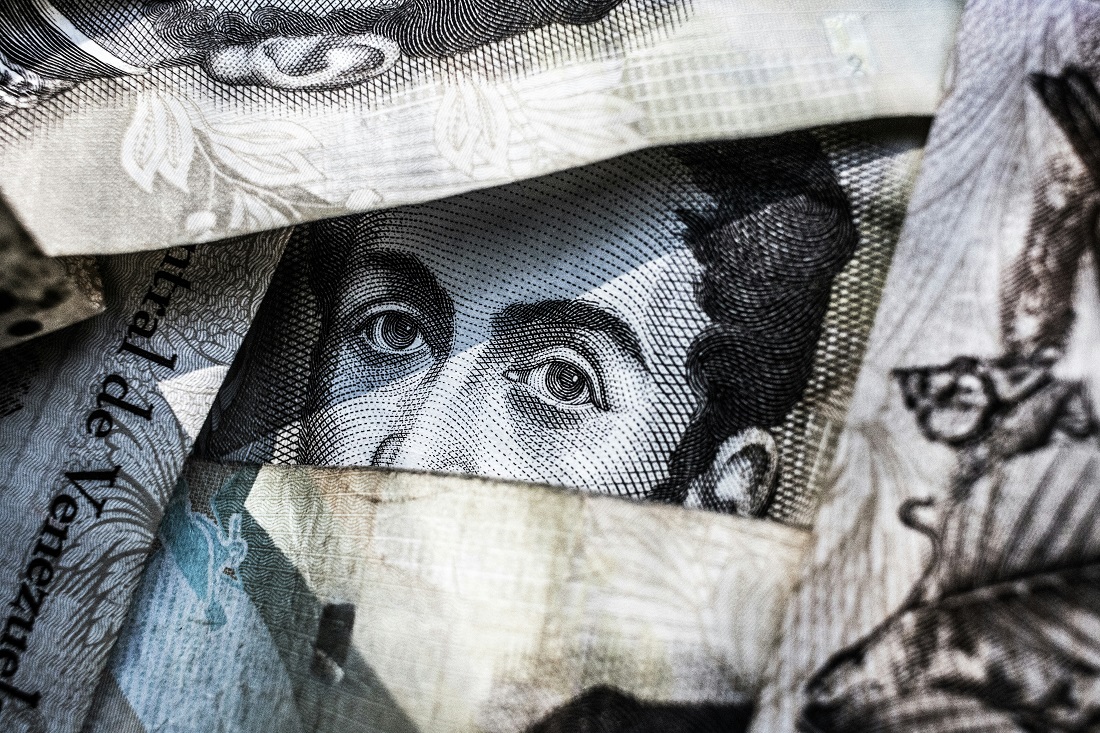
(Reference image source: Freddie Collins on Unsplash)
Follow our news on Google! For current, interesting, and accurate information, click here to see all the content on Bitfinance.news. You can also find us on X/Twitter and Instagram
