
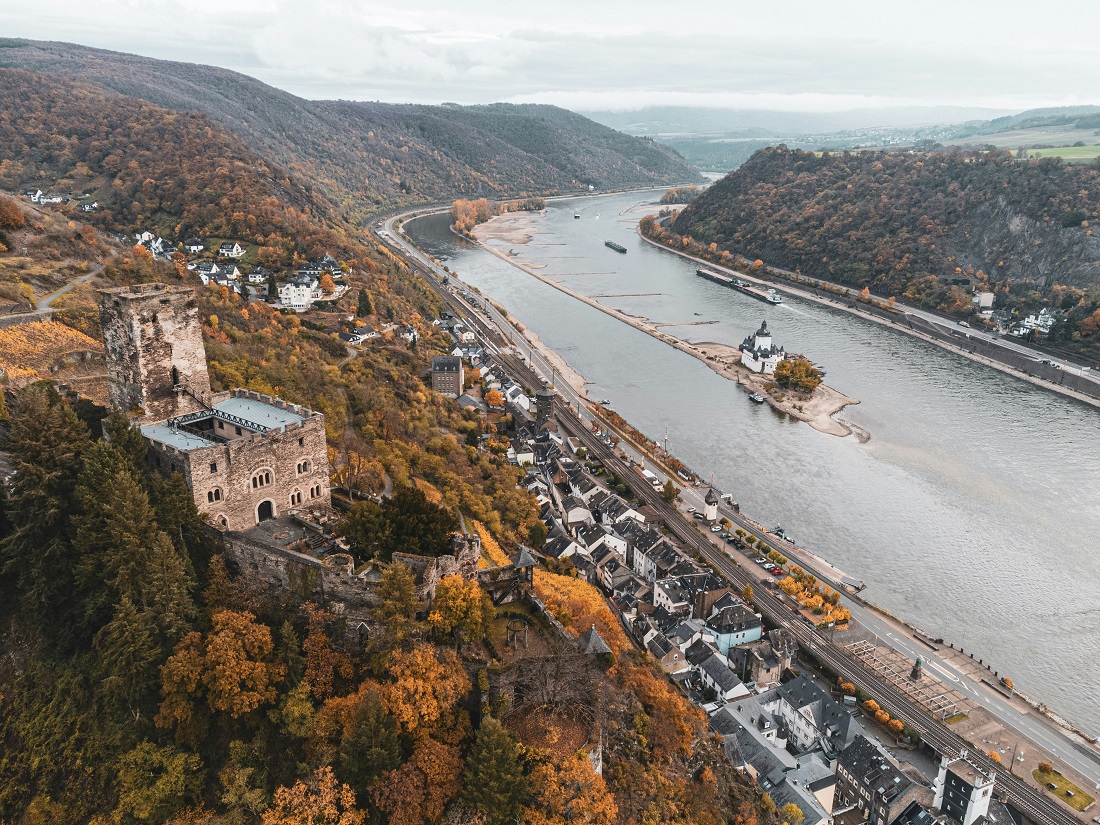
German economy threatened by low Rhine levels
The drought in Germany is reducing the flow of the Rhine, a vital waterway for transporting key goods for the industrial sector. This situation could have a significant impact on the economy due to the critically low levels for merchant ships
The Rhine has reached its critical level due to the drought, a situation that is having a direct impact on the German economy, as companies are reducing merchant ship traffic on the river.
The waterway still accounts for 5 % of freight transport in the European country, but the river level has dropped by more than 40 centimeters; that is, the minimum level for standard merchant ships, according to the Federal Waterways and Inland Waterways Administration (WSV).
“According to local media, in recent weeks, transport companies have significantly reduced their loads along the Rhine, in many cases to a fifth of their usual capacity.”
The discussion centers on bulk materials, such as iron ore, coal, sand, and petroleum products, representing approximately 3.28 billion tons. In a critical scenario, the drought could render the waterway impassable, effectively dividing it in two. “This would create two separate zones. On one side, maritime traffic would continue between the North Sea ports — Amsterdam, Rotterdam, and Antwerp — and the Cologne region via the Rhine and the canal network in western Germany.”
The impact on the German economy if the Rhine were to be divided in two by drought would be significant, as the country might lack the capacity to transport the tonnage of goods carried by ships via the Rhine by truck and other means. Furthermore, this process would increase costs for the government.
M.Pino
Source: dw.com
(Reference image source: Joshua Kettle on Unsplash)
Follow our news on Google! For current, interesting, and accurate information, click here to see all the content on Bitfinance.news. You can also find us on X/Twitter and Instagram
