
Hyundai and the future of mobility highlighted at the FISITA World Summit 2026
Hyundai Motor Group co-organized the World Mobility Summit in South Korea with the International Federation of Automotive Engineering Societies
Hyundai Motor Group unveiled its technology roadmap focused on multi-path electrification and artificial intelligence at the FISITA World Summit 2026 in South Korea. The strategy combines flexible propulsion (BEV, HEV, EREV, and FCEV) with the development of software-defined vehicles, and models such as the Genesis GV90 and the updated and iconic Hyundai Tucson were showcased.
The Group co-organized the FISITA World Mobility Summit 2026 with the International Federation of Automotive Engineering Societies (FISITA). The summit was held on November 4 and 5 at the Rolling Hills Hotel in Hwaseong, South Korea.
Founded in 1948, FISITA is a global organization that brings together automotive engineering societies and industry experts to promote knowledge sharing and technological innovation in the automotive sector. Every two years, FISITA organizes the World Mobility Summit, which brings together executives and technology leaders from mobility companies around the globe to analyze industry challenges and future technological directions, such as artificial intelligence (AI) and vehicle electrification.
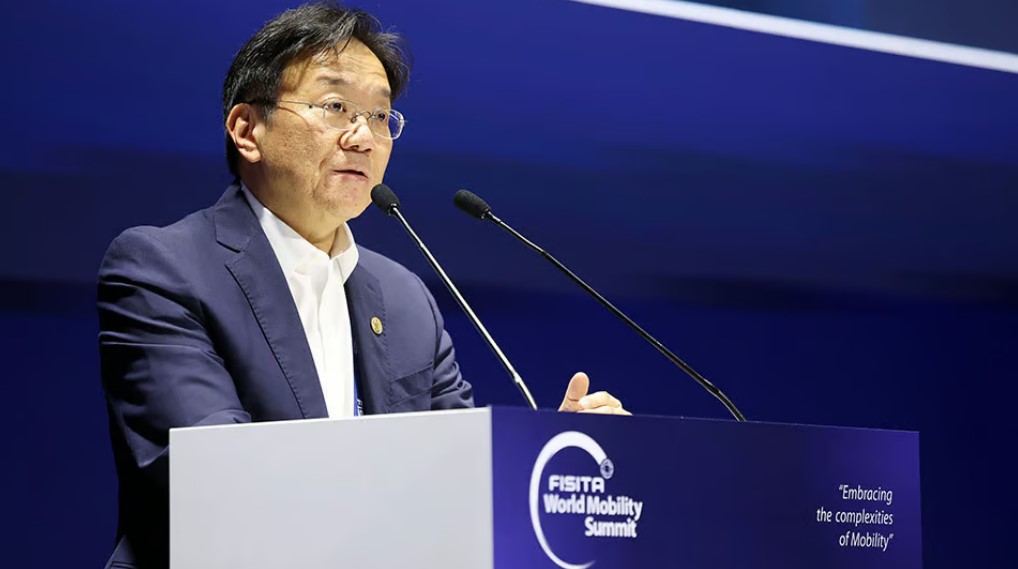
This year’s edition is the first to be held in Korea. Chang Hwan Kim, Executive Vice President and Head of the Energy Solutions for Electrification Technology Unit at Hyundai Motor Group, is also the first Korean to hold the FISITA presidency.
“Hyundai Motor Group will continue to strengthen its competitiveness in key technologies for the mobility of the future and will continue to participate in technology exchange and collaboration with the global automotive industry to contribute to the development of this sector,” said Chang Hwan Kim.
What electrification strategy did Hyundai present?
During the first day, Manfred Harrer, President and Head of the Research and Development Division at Hyundai Motor Group, delivered a keynote address in which he presented the Group’s electrification strategy. This includes battery electric vehicles (BEVs), hybrid electric vehicles (HEVs), extended-range electric vehicles (EREVs), and fuel cell electric vehicles (FCEVs).
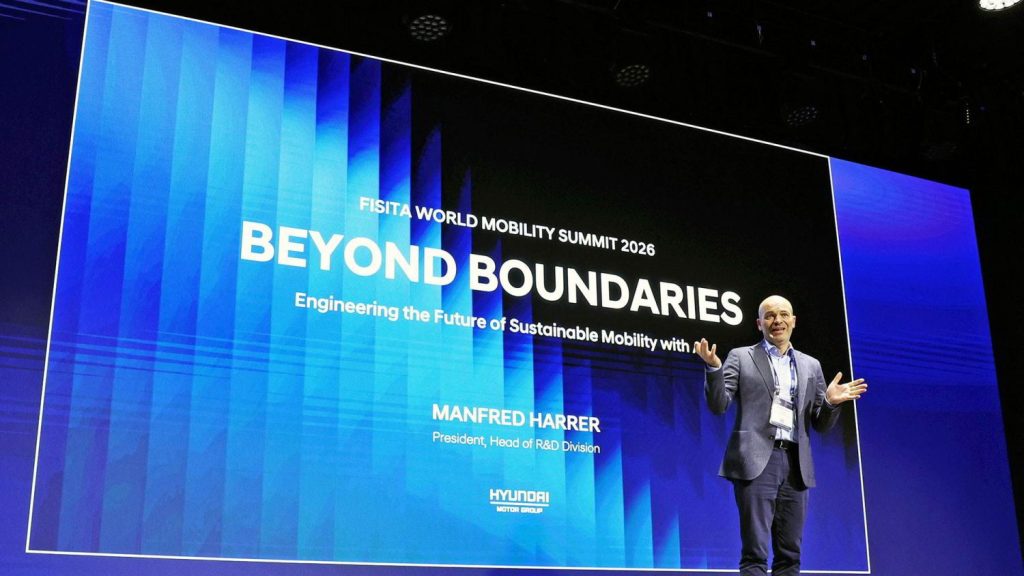
Harrer explained Hyundai Motor Group’s technology development roadmap, designed to respond flexibly to market changes and customer needs.
He also emphasized the importance of strengthening the development capabilities for the vehicles of the future by combining engineering technologies with AI-based digital capabilities, integrating the strengths of different technologies to advance toward sustainable mobility.
Earlier, in his opening remarks, Kim noted that the automotive industry is undergoing an unprecedented technological transition. He also stressed the importance of diverse technological approaches and greater global collaboration to drive the mobility of the future.
Significant themes and influential exhibits
Under the theme “Addressing the Complexities of Mobility,” the summit featured keynote addresses and panel discussions.
Leading automakers also showcased vehicles and unveiled new technologies during the event. Hyundai Motor Group followed suit, showcasing its Genesis GV90 and the updated, iconic Hyundai Tucson, along with a battery pack, a hydrogen tank, and a robotic platform, which captivated the attention and admiration of attendees and participants.
For more details, visit Hyundai Motor Group.
Information and images courtesy of Hyundai Motor Group and Hyundai Venezuela
Follow our news on Google! For current, interesting, and accurate information, click here to see all the content on Bitfinance.news. You can also find us on X/Twitter and Instagram
