
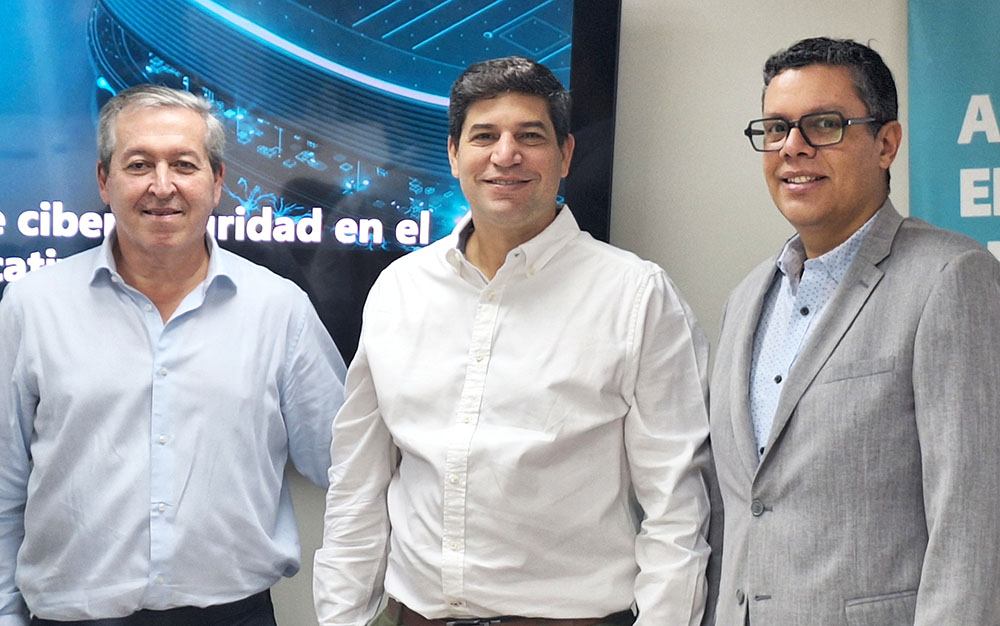
Digital vulnerabilities grew 50 % in 2026 and continue to rise toward the end of the year
The unprecedented acceleration in security breaches exposes the fragility of companies and necessitates strengthening technology governance
During its regular Technology Breakfast with media and journalists, the ESET Venezuela team analyzed the critical trends shaping the current cybersecurity landscape, the unprecedented growth of digital threats, and the urgent need to implement transparent, data-driven protection schemes.
The meeting formally began with welcoming remarks from Michele Flammia, General Manager of ESET Venezuela, who emphasized that dialogue with the press is essential in an operational context where the rapid adoption of technological tools and the rise of cybercrime are forcing organizations to rethink their business continuity and risk management models.

Record growth in vulnerabilities and the SOC community
Aníbal Vera, Cybersecurity, Engineering Manager, and special guest, presented a quantitative breakdown of cyber threat trends during 2026, using data from the National Vulnerability Database (NVD).

Vera revealed that registered vulnerabilities (CVEs) in the first half of 2026 showed a 49.5 % increase compared to the same period in 2025 (35,364 versus 23,656), projecting a cumulative total of nearly 88,000 records by year’s end.
Given this acceleration, Vera emphasized the fundamental role of the Security Operations Center (SOC) community in sharing intelligence and understanding the origin of intrusions. The specialist proposed auditing the operational readiness of SOCs using hard data: comprehensive analysis of alerts, immediate response metrics, coverage against known threats, and strict control over the AI in use.
The danger of the black box effect in Artificial Intelligence
Carlos López, Support and Training Manager at ESET, focused his presentation on the risks arising from implementing Artificial Intelligence algorithms without clear governance mechanisms, a phenomenon known as the “black box effect.”
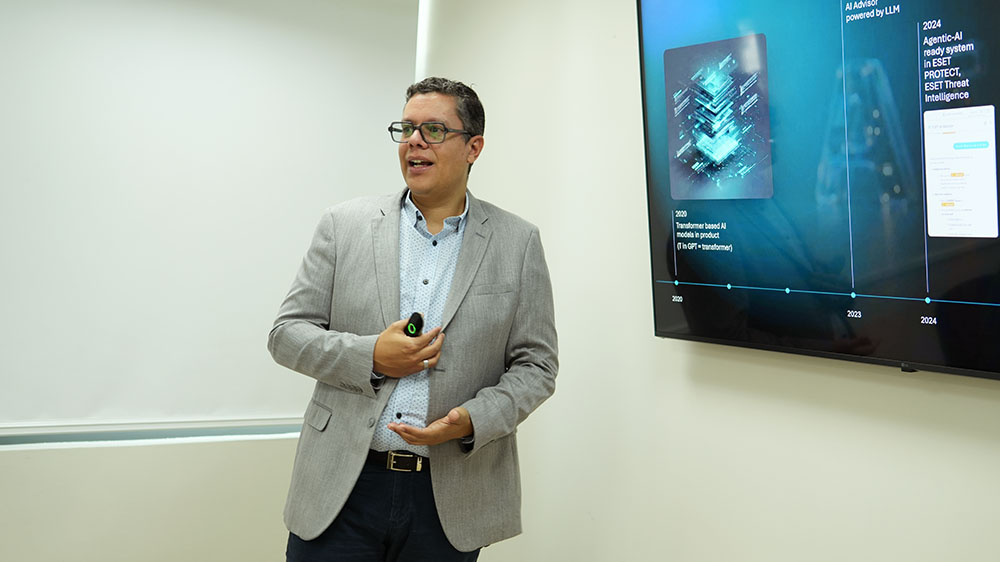
López emphasized that Artificial Intelligence cannot operate as an opaque or isolated tool within a company’s infrastructure, since making decisions or blocking processes without traceability exposes organizations to serious regulatory sanctions, financial losses, and reputational damage.
He pointed out the need to adopt Explainable AI (XAI) frameworks that combine automation with human judgment and oversight (Human-in-the-loop).
Lack of awareness and gaps in the education sector
The closing remarks were delivered by José Luis Rangel, Marketing Manager of ESET Venezuela, who warned about the vulnerability facing the national education sector due to a lack of investment and awareness regarding digital security.

Rangel explained that many schools and their administrators continue to perceive cybersecurity as an unnecessary expense, as they have not been direct victims of visible mass attacks.
However, he warned that teachers, students, and administrative processes are constantly exposed to the improper handling of sensitive data and the unregulated integration of new technologies in classrooms, making an important and timely call to migrate toward a preventative strategy.
Future publications will expand upon and focus on each of the presentations.
Video Summary
For more information, please visit the ESET website: https://www.eset.com/ve/. Also, follow them on social media: Instagram (@eset_ve) and X (@eset_ve).
Source: On-site video coverage and Comstat Rowland Strategic Communications
Audiovisual production: Jesús Ramírez and Ida Febres
Follow our news on Google! For current, interesting, and accurate information, click here to see all the content on Bitfinance.news. You can also find us on X/Twitter and Instagram
