
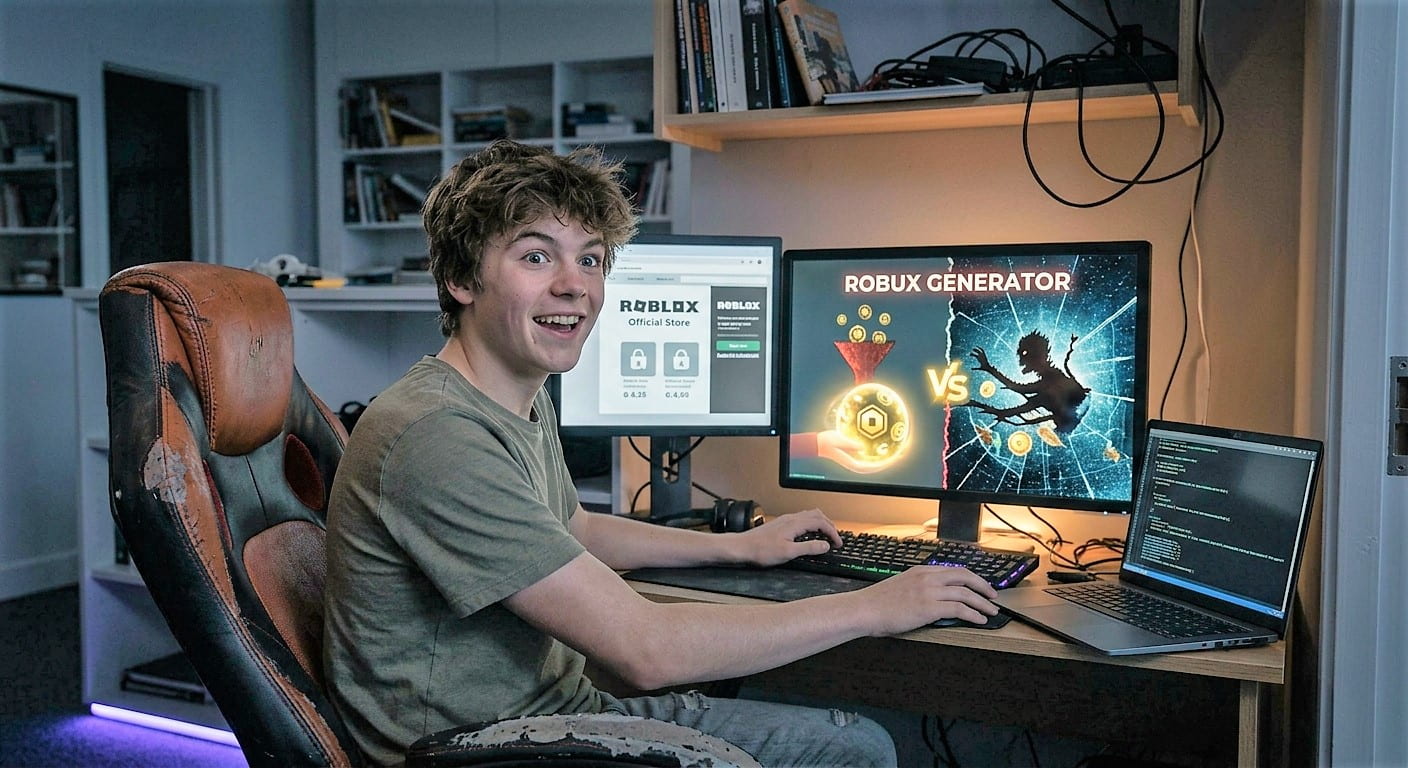
What’s real and what’s a scam: Are there free Robux in Roblox?
ESET Latin America warns that free Robux is a common promise in the Roblox game, and shares key points to help you discover which offers are legitimate and how to avoid the most common scams
Those who enjoy the popular Roblox game have likely been tempted at some point to look for a way to get free Robux. This virtual currency (Robux) can unlock a wide variety of experiences within the platform. Younger players, in particular, may want more Robux due to a combination of FOMO (fear of missing out) and the desire to improve their online status. ESET, a leading company in proactive threat detection, warns of the importance of differentiating between “free” and “earned” when it comes to obtaining Robux, in order to distinguish between legitimate offers and avoid scams.
There are official Roblox programs, as well as programs from trusted partners like Microsoft, that allow you to complete tasks and/or answer questions to earn a Roblox gift card. Additionally, Roblox offers 25 % more Robux when users legitimately purchase the virtual currency through the website, computers, or gift cards. There are also ways to monetizar contenido dentro de Roblox. For example, through subscriptions, charging access fees, selling items or skills that other Roblox users can buy, offering private servers, or marketing models and add-ons for other creators in the Creator Store. It’s even possible to sell avatar items in the Marketplace and earn a share of the profits.
However, these are opportunities to earn Robux, and they can be more difficult to access than they seem. In other words, you really don’t get anything for free.
“Roblox makes it very clear: ‘There is no such thing as free Robux, free subscription offers, cheats, or codes.’ What does exist, unfortunately, are numerous scammers trying to trick you into giving away your personal information and account login details by promising free Robux,” says Mario Micucci, Cybersecurity Researcher at ESET Latin America.
ESET maintains that there are as many variations of these scams as there are legitimate ways to earn Robux. Here are some of the most common:
- “Free” Robux generators that ask for your Roblox username and, in some cases, request that you complete surveys or install software. As you might expect, the criminals only want your username to try to hijack your account. The surveys are often designed to collect personal information without the user’s knowledge, and the software may include malicious code. Roblox is a popular platform among cybercriminals for distributing malware.
- Phishing pages that you reach after clicking a link in an email, unsolicited message, or malicious ad. These pages mimic the official Roblox website to steal your credentials.
- Fake giveaways on social media platforms like YouTube, TikTok, or Discord. The administrator claims to be giving away thousands of free Robux, but the provided link is malicious.
- Limited-time offers, which can arrive via phishing emails or social media posts and ads. The goal is to create a sense of urgency to trick you into making a bad decision, such as clicking a link or sharing personal information in exchange for supposed “free Robux” that don’t actually exist.
- Fake gift cards are another opportunity for scammers to get what they want. They may offer to exchange personal information, login credentials, or even money for a gift card code that doesn’t actually exist.
Legitimate promotions will never ask for your password or two-step verification code
“Any site that asks for login credentials or a supposed ‘human verification’ outside of the official Roblox website is a scam, unless you can independently verify that it is an official Roblox page or an authorized partner,” warns the ESET researcher.
ESET advises that legitimate promotions will never ask for your password or two-factor authentication (2FA) code. They also won’t use limited-time offers or attention-grabbing promises. They won’t warn you that you could lose Robux if you don’t act quickly. And they will never ask you to download a supposed “Robux generator.”
“Be wary of any special offers related to Robux. Never share your login credentials or personal information with other users. Also, avoid clicking on suspicious links or entering your passwords on non-Roblox websites,” advises Micucci.
If you are a parent or guardian and you are worried that your child might fall for these types of scams, it is important to take a moment to talk about these concerns. The main goal is to teach good digital security habits, such as not sharing passwords or clicking on suspicious links. It’s also important to help them understand that “free Robux” doesn’t exist and that this virtual currency has a real cost.
ESET maintains that it’s important for children to feel comfortable approaching adults with any problem, regardless of what happened. This can only be achieved by calmly explaining why they can’t freely access their credit card and why they can only use the platform responsibly.
If you believe a child or teenager has already been the victim of a scam, ESET recommends changing the account login credentials (and any other shared credentials), enabling two-factor authentication (2FA), and verifying that the recovery email address hasn’t been changed. Review linked payment methods for suspicious activity and consider contacting the bank or freezing the card. If there are concerns about malware, it’s important to scan the device with a reliable security solution. Above all, do not blame the child, but listen to them, reassure them, and help them follow these steps.
To learn more about ESET and this topic, you can check: https://www.welivesecurity.com/es/seguridad-menores/robux-gratis-estafas-roblox/.
Other useful preventative information regarding cybersecurity and protection can be found at: https://www.eset.com/ve/, and on their social media channels @eset_ve. Also on Instagram (@esetla) and Facebook (ESET).
With information and reference image provided by ESET and Comstat Rowland
Follow our news on Google! For current, interesting, and accurate information, click here to see all the content on Bitfinance.news. You can also find us on X/Twitter and Instagram
