
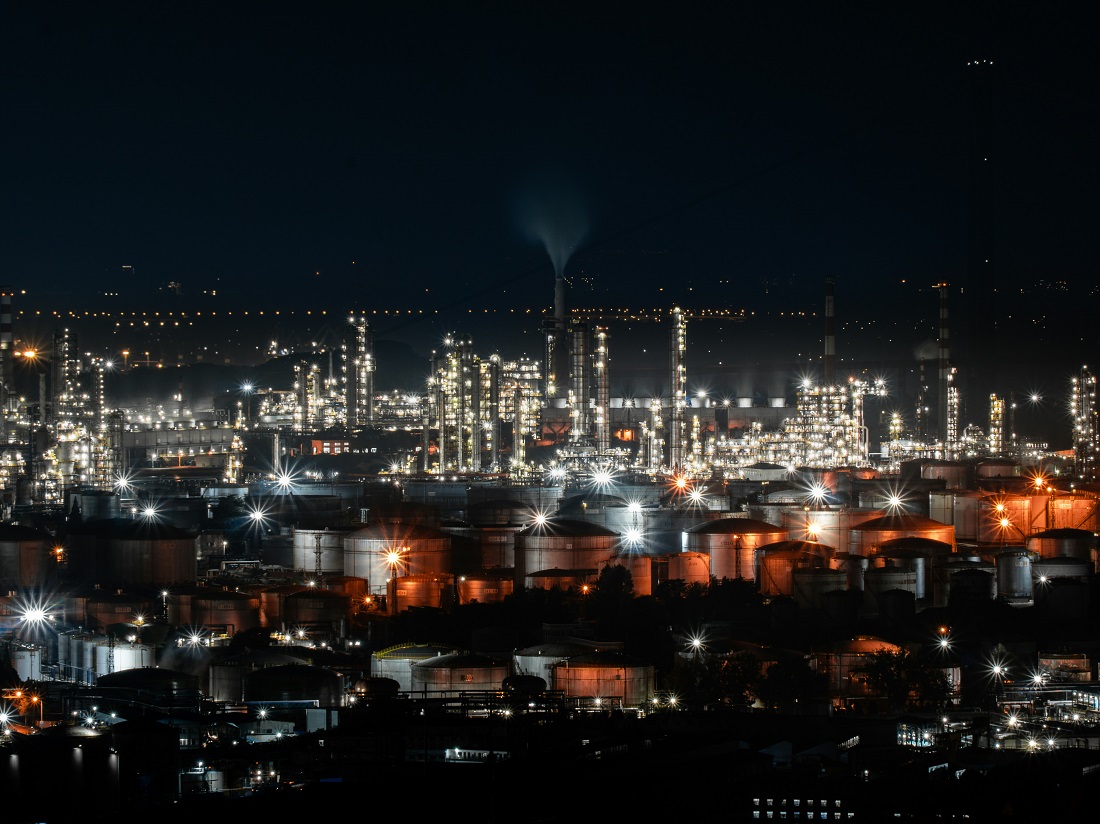
The growth in oil refining capacity for the period 2026-2030 is estimated at 4.2 million barrels per day, with 95 % concentrated in Africa and Asia-Pacific.
This trend would be supported by increased demand for refined products, although current projects must be taken into account.
BloombergNEF’s projections could materialize during the second half of this decade, “after the decline recorded last year.” The estimated figure is “well above the projected growth in demand for refined products and would represent a trend reversal after several years of moderation in new capacity and high levels of facility closures.”
In this scenario, excess capacity could intensify, boosting competition and putting downward pressure on utilization rates and refining margins, particularly at less competitive facilities.
Africa and Asia-Pacific account for 95 % of global net growth
Both regions are leading the growth in refining capacity through 2030, a phenomenon driven by “stronger demand prospects, import substitution strategies,” and significant investment in export-oriented facilities and integrated complexes with the petrochemical industry.
Short-term growth appears largely robust. China and India account for 71% of the total new capacity planned for 2026 and 2027; most of these projects are already operational or under construction. The downside is the decreasing visibility as the decade progresses, “since a larger proportion of the capacity planned for 2028-2030 is still in the early stages of development, increasing the risk of delays and cancellations.”
Global energy outlook
Differences are emerging in the global trade flows of crude oil and refined products. For example, China faces a supply glut that could drive a new wave of consolidation among smaller, independent facilities. Meanwhile, India and Africa are expanding their capacity to achieve greater self-sufficiency. In contrast, the European and US markets could face further refinery closures.
The Middle East conflict continues to disrupt the flow of goods from refineries in the region, as well as raw materials from the Persian Gulf, impacting refined product markets and shifting the competitive advantage toward refineries in the Atlantic Basin. The ongoing conflict with Iran reinforces the need to strengthen storage capacity and focus attention on pipelines and logistical infrastructure.
M.Pino
Source: elperiodicodelaenergia
(Main reference image source: Steven Lynn on Unsplash)
Follow our news on Google! For current, interesting, and accurate information, click here to see all the content on Bitfinance.news. You can also find us on X/Twitter and Instagram
